
Agents Should Live in
the UI. Not Replace It.
An exploration of what's been working and the real-world value of agents.

The companies winning right now are not replacing their operators with AI. They are giving their operators better workspaces.
Harvey is not replacing lawyers. It is giving them a workspace where legal research, document drafting, and case analysis happen with AI embedded in the tools they already use. Hebbia is not replacing analysts. It is giving them a workspace where an agent can read thousands of documents and surface what matters without the analyst ever leaving the interface. And Clay is not replacing salespeople. It is giving them a workspace where an agent can help with prospecting, qualifying, and closing deals.
The pattern is the same. AI is integrated into the tools they use as expert operator, so the experts can still lead the work and agents have the context when they need to assist.
| Task | Lead | Due |
|---|---|---|
| Find hotel for offsite | Jun 29 | |
| Reimburse employee flights | Jul 14 | |
| Schedule Cultural Activities | Jul 16 | |
| Book hotel rooms | Jul 24 | |
| Follow up with sponsors | Jul 28 | |
| Order event swag | Jul 30 |

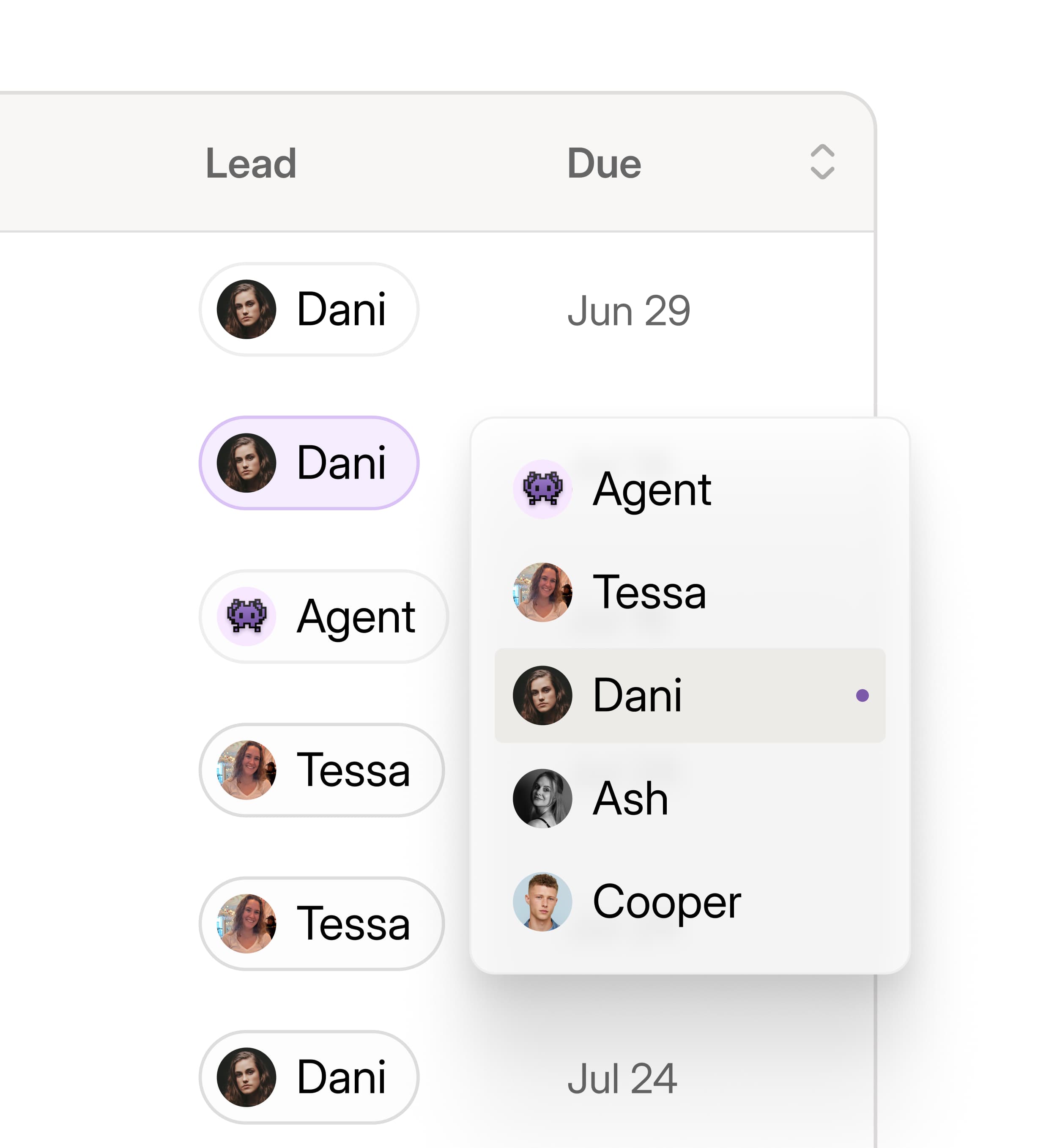
There is a reason most people feel frustrated when they interact with a chatbot to get their work done. They type a request and something comes back. They're not sure how it got there, how to confirm if it's right, and most importantly, what information it considered or what it may have missed.
This is not a technology problem. It is a transparency problem.
Research in psychology has shown that people have a deep need for autonomy. Self-determination theory identifies it as one of the core drivers of motivation and satisfaction. There is also a well-documented phenomenon called the illusion of control, where people prefer to feel agency over outcomes, even when their input does not change the result. We want to feel like we are driving.
When an agent operates behind a chat interface, it removes that feeling. The human becomes a passenger giving directions to someone they cannot see. When an agent operates inside a workspace, the human stays in the driver's seat. They can see what is happening, understand why, and step in when it matters.
Beyond human psychology and transparency of information, there is a practical argument for agents living inside the interface. Doing is often faster than prompting.
When you have to describe what you want in a text box, you are translating your intent and the context of your problem into language. There are whole trainings based on how to best prompt a chat to optimize your results. When an agent lives in the workspace, it can observe what you are doing and respond to signals rather than instructions. A status change. A conversation. A deadline passing. These are all inputs that do not require the human to stop working and start prompting.
This is what metawork means to me.
Metawork is all of the tasks that surround the actual work. Metawork can be anything from updating a project status or reassigning tickets, to sending a follow-up message about something that should be visible. Software feels annoying to use when we have to manually keep everything up to date. Plenty of companies have full-time employees whose entire job is maintaining the state of their project management tools.
We are already seeing this expense shrink. Lightfield, an AI native CRM, has publicly discussed eliminating metawork from their platform entirely. When agents can observe signals instead of waiting for prompts, the layer of work that exists just to keep everything aligned starts to disappear.
Application example
I started thinking about where this have a lot of impact, and I kept coming back to event planning.
I have seen people close to me who work in field marketing describe the same frustration over and over. They feel like they are kept from doing their actual job by administrative tasks. Working hours are sucked away coordinating vendors, updating timelines, chasing approvals across email, Slack, and spreadsheets, and keeping stakeholders aligned on what has changed and what has not.
Event planning is riddled with metawork which is limiting the creativity and productivity of field marketers.
At the same time, we are seeing a rise in the priority of in-person experiences. As brands are investing more in live events, experiential marketing, and field activations, the tools have not kept up.
This is the opportunity I am exploring with Dance.
Dance is a collaborative workspace that enables field marketing teams to work alongside agents.



 Overview
 Docs
Docs Plan
Plan



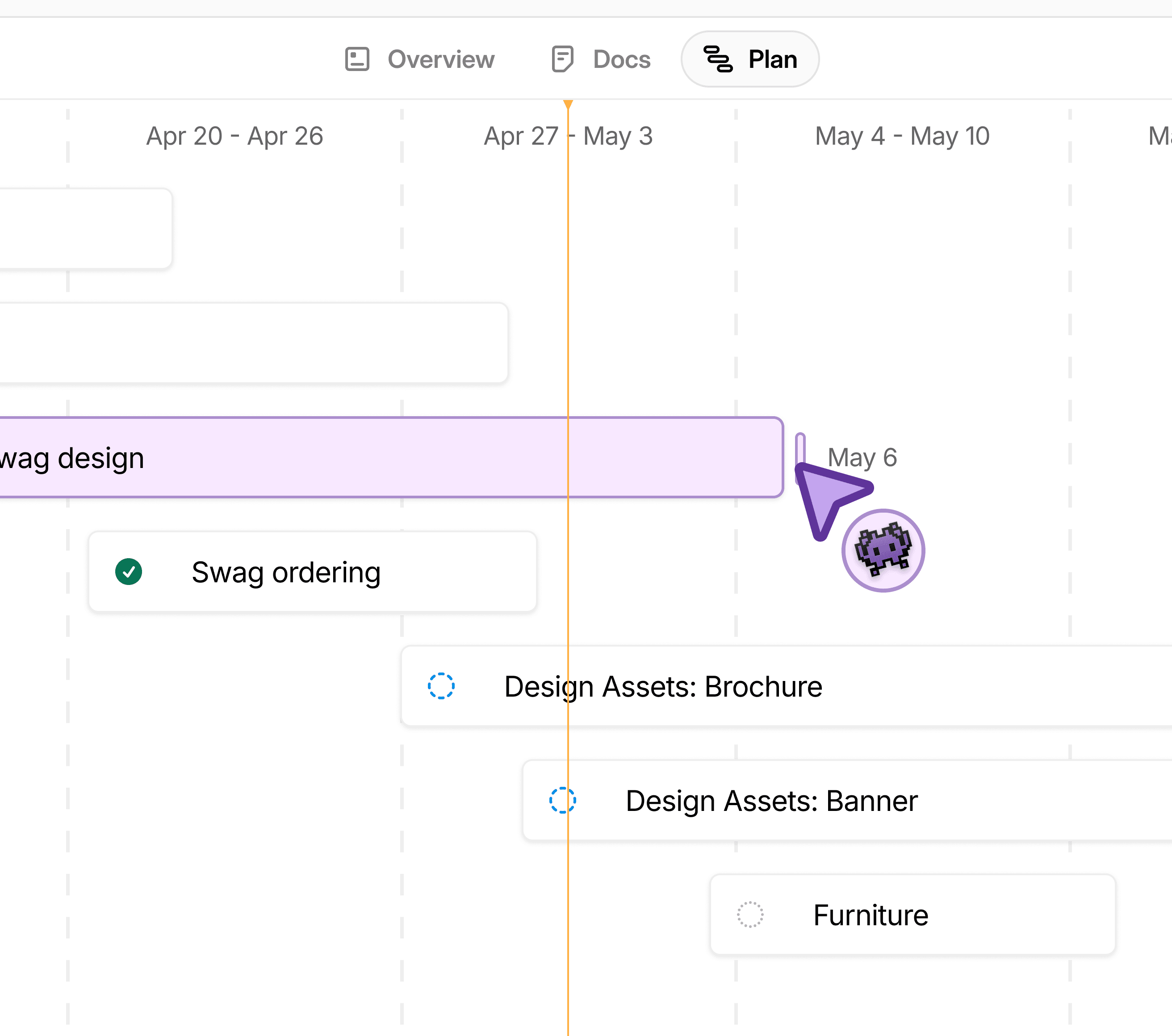
Through explicit signals, like a human prompting a new event to be created, or implicit signals, like overdue tasks influencing phase timelines, agents are able to make informed adjustments that used to be administrative work for humans. Having a workspace that responds to the work, frees the team up to be more strategic and creative and/or to run more events in the same amount of time.
On top of agent assistance, Dance keeps all the event information and necessary tasks live under that event object. Conversations can happen inside the task itself, not in a separate Slack thread or email chain, making it easier for agents to follow the conversation. Agents can be tagged in-line to answer a question; they can be assigned to the task; and they can understand all of the context to provide the best response. When a conversation leads to a decision, the agent can update the task status, adjust the timeline, or flag a dependency without anyone asking it to. This is what it looks like to offload metawork so you can focus on the higher priority objectives.





Connecting agents to external tools like email, they can go another step forward by understanding the conversation being had and offering follow-up drafts. This is especially helpful for things like a vendor confirmation email or stakeholder alignment briefs. While the human still drives since they maintain the subject matter expertise, the agent assists. This is not about replacing the operator. It is about removing the friction between the operator and their best work.


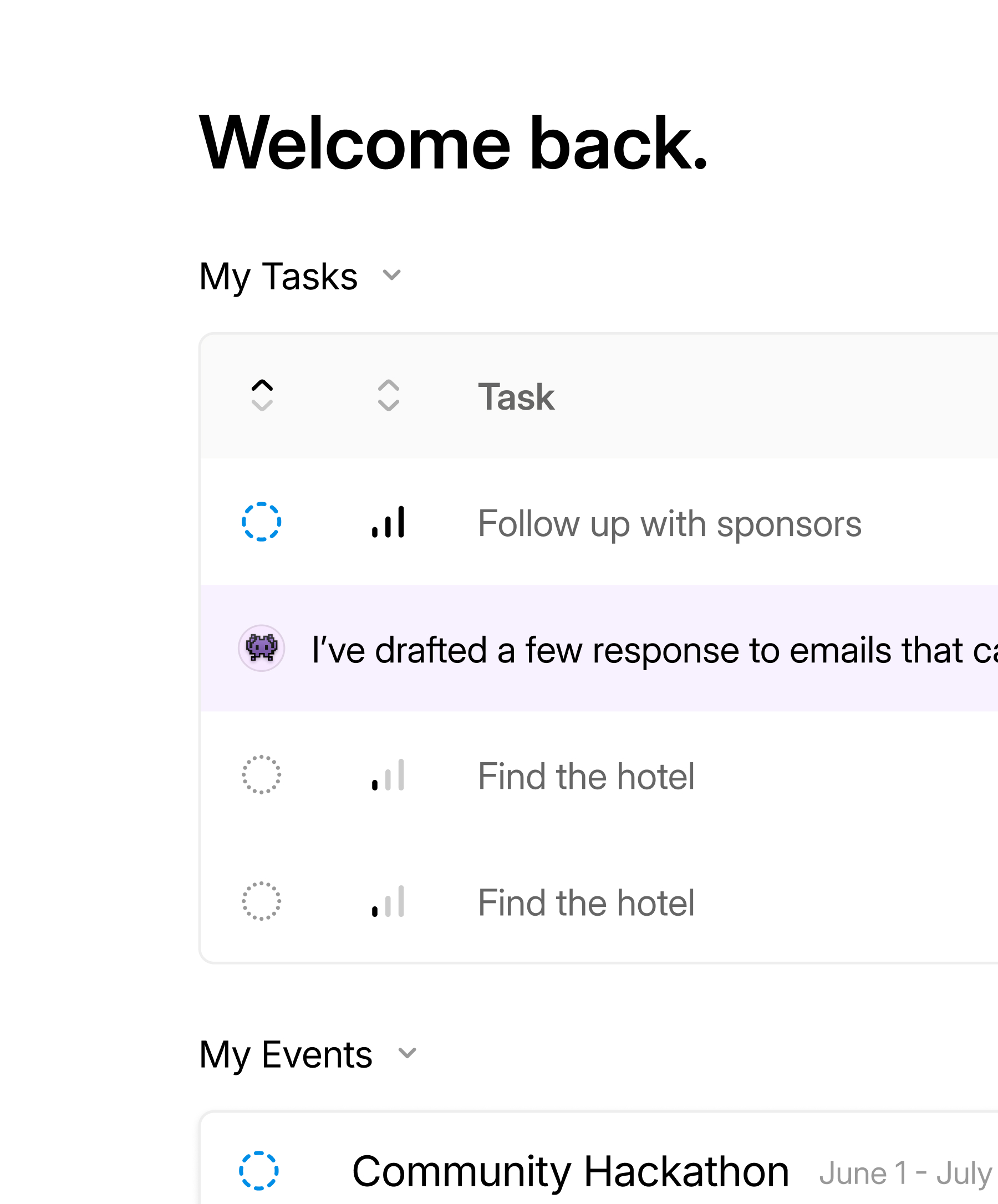
The best agent experience is not one where users talk to an AI inside a chat bot. This currently requires reminding the agent of the context of the work they are doing. It is one where the agent lives inside the context and remembers things like a teammate. Agnetic workspaces enable faster teams, higher quality of work, and more time spent doing the work they are paid to do.
Explore more at usedance.com.